Concept designConcept design. Fictional business, not client work.By Press Row Studio

Larkspur Line · Salina, KSMon–Thu 7:30 to 4:30 · Fri to 1:00

Can this tooth be saved?

It’s the first question we ask, every time. Most gum disease can be treated and the tooth kept. When it can’t, we replace it with an implant planned on a 3D scan. Either way, you leave the first visit knowing which route you’re on.

Pocket depth, measured at S1mm

1–3healthy
4–5early pocket
6+deep pocket

General ranges. A reading means most alongside bleeding, x-rays and bone.

  • Save route
  • Replace route
  • Start

Route map. Every visit starts at S1, an exam and pocket charting. If the tooth can be kept, the save route runs S2 to S4. If it can’t, the replace route runs S5 to S7.

Can it be kept?

Save

Book a perio evaluation

Replace

Book an implant consult

Tap a stop to see the route to it.

Start · S1 · First visit

Every tooth, measured in millimeters.

The first visit takes about 75 minutes, and most of it is measuring. You see your own numbers and hear which route each tooth is on before anything is booked.

gum marginbonegumbone level

Cross-section of one tooth with a Williams-style probe (marks at 1, 2, 3, 5, 7, 8, 9 and 10 mm). Drawing, not to clinical scale.

5mmearly pocket

Likely route

  1. S1
  2. S2
  3. S3
  4. S4
  5. S5
  6. S6
  7. S7

Early pockets. Usually scaling and root planing first, then we measure again a few weeks later.

A general picture of how we think, not a diagnosis. Only an exam can say which route a tooth is on.

  1. 0:00

    Health history

    Your medications, conditions like diabetes, and whether you smoke or vape. All of them change how gums heal.

  2. 0:10

    Pocket charting

    A thin, blunt probe measures six spots around every tooth. We call out the numbers; a hygienist writes them down.

  3. 0:35

    X-rays

    To see the bone. If an implant might be on the table, a 3D (CBCT) scan in the same room.

  4. 0:50

    The chart, with you

    We show you your numbers on screen and tell you which route each tooth is on, and why.

  5. 1:05

    A written plan

    Steps, visits and an estimate you take home. A copy goes to your dentist the same week.

What to bring
  • A list of your medications, including blood thinners and anything for bone density
  • Your dental insurance card, and your medical card if you have one
  • Recent x-rays, if your dentist hasn’t sent them (we can ask for them)
  • Questions. Write them down; everyone forgets one in the chair.
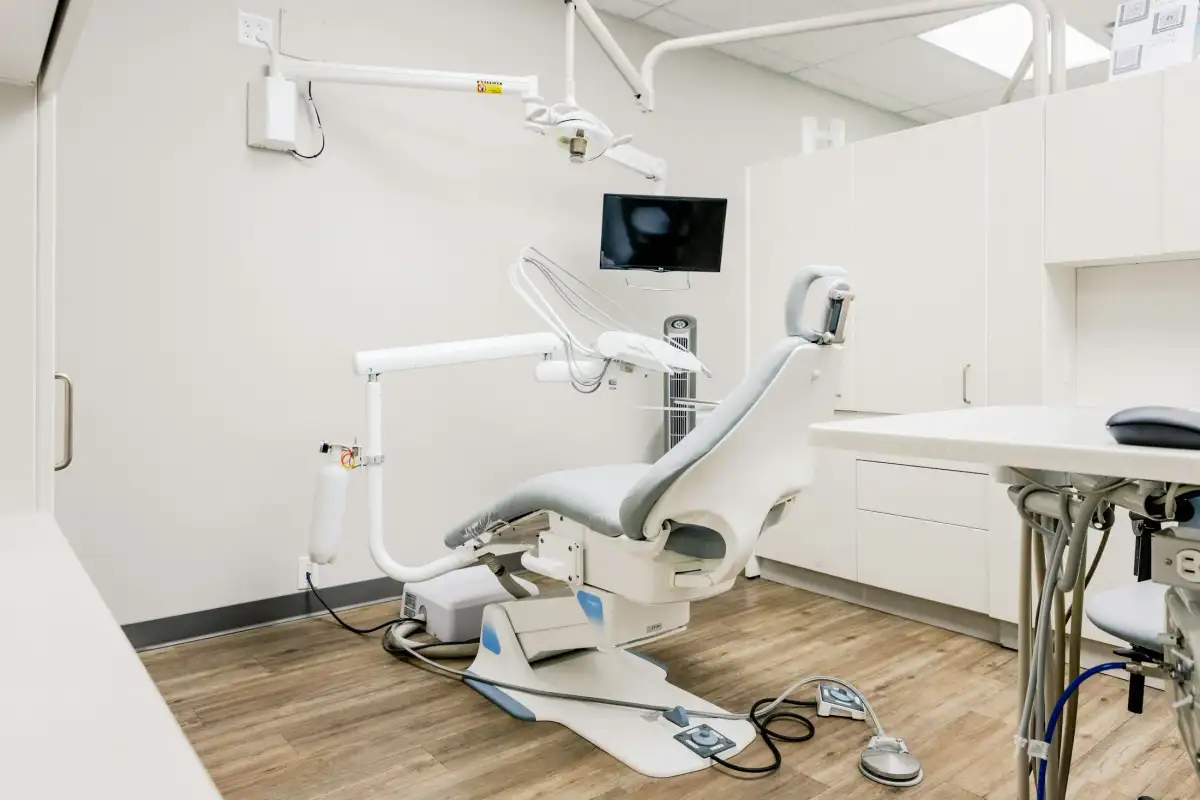
An empty dental treatment room with a gray chair, an overhead light and a wall monitor (stock photo)
Stock photo, not our office.One room, one chair, x-rays and the 3D scanner down the hall.

The fork · Can it be kept?

Keep as much of you as we can.

Every treatment we offer sits somewhere on this line, ordered by how much of your own tooth it keeps. We start at the left and move right only when the tooth tells us to.

01 / 07 · Save route · S2

Scaling and root planing

KeepsYour tooth, root, gum and bone

A deep cleaning of the root surfaces below the gumline, under local anesthetic, usually one side of the mouth per visit.

Go to S2

Save route · S2 to S4 · Gum therapy

Save

Gum disease starts as plaque and tartar below the gumline. Left alone, the gum pulls away and the bone that holds the tooth wears down. Treated, it can usually be stopped, and the tooth stays yours.

About 42% of U.S. adults 30 and older who still have teeth have periodontitis, mild to severe.CDC data, NHANES 2009–2014 (Eke et al., JADA 2018)

Signs worth a visit

  • Gums that bleed when you brush or floss
  • Red, swollen or tender gums
  • Bad breath that won’t go away
  • Gums pulling back; teeth that look longer
  • Teeth that feel loose or have shifted
  • Pain when you chew, or sensitive teeth

Early gum disease often doesn’t hurt at all. That’s why we measure.

S2 of S4Gum therapy · nonsurgical

Scaling and root planing

What it is
A deep cleaning below the gumline. We remove plaque and tartar from the roots, where a brush and floss can’t reach, and smooth the root so the gum can tighten around it again.
Who it’s for
Pockets of about 4 mm or more, gums that bleed when you brush, and tartar below the gumline on x-rays.
How it goes
Usually two visits, one side of the mouth each, about an hour and a half with local anesthetic. A few weeks later we chart your pockets again.
After
Gums can be tender for a day or two. Many people need nothing more than this and regular maintenance.

S3 of S4Gum therapy · surgical

Pocket reduction or regeneration

What it is
When a pocket stays deep after cleaning, we fold the gum back, clean the root and bone, and fit the gum snugly again. Where bone has been lost, a graft, membrane or protein gel can help rebuild some of it.
Who it’s for
Pockets that stay deep at re-check (often 6 mm or more), or a bone defect around a tooth worth keeping.
How it goes
One visit per area, with local anesthetic and sedation if you’d like it. Stitches come out in one to two weeks.
After
Soft foods for a few days and a special rinse. We check healing at one and four weeks.

S4 of S4Gum therapy · root coverage

Gum graft

What it is
Gum tissue, often taken from the roof of your mouth or from a donor-tissue material, is moved over a root that has become exposed, or used to thicken thin gum.
Who it’s for
Gums that have pulled back from a tooth, roots that are sensitive or exposed, or thin gum next to an implant.
How it goes
One visit, about an hour per area, with local anesthetic. We tell you beforehand which donor option fits your gum.
After
Cool, soft foods for a week; no brushing on the graft until we say so. A covered root is better protected from decay and may feel less sensitive.

S2 · 1 of 3

Interchange · S4 and S5

Grafting runs on both lines.

A graft rebuilds what gum disease or a lost tooth took away: gum over a root, or bone where an implant will go. Same chair, same instruments, different reasons.

  • Save line · S4

    Gum graft

    Covers an exposed root or thickens thin gum around a tooth or an implant.

  • Replace line · S5

    Socket graft

    Fills the socket at extraction so there’s bone to work with later.

  • Replace line · S6

    Ridge and sinus grafts

    Builds bone width or height (a sinus lift, in the upper back jaw) where an implant needs more.

Graft material can come from your own mouth, a donor, an animal source or a synthetic. We explain which we’d use and why before you decide.

Replace route · S5 to S7 · Implants

Replace

When a tooth can’t be kept, an implant is a new root in the jaw. We plan where it goes on a 3D scan, place it, and send you back to your dentist for the tooth on top.

  • 1

    One tooth

    One implant and one crown. The teeth beside it aren’t filed down for a bridge.

  • 2+

    Several teeth

    Implants can hold a bridge, so three missing teeth may need only two posts.

  • Arch

    A full arch

    Several implants hold a full set of teeth on one jaw, fixed or snap-in.

S5 of S7Replace · getting ready

Extraction and socket graft

What it is
When a tooth can’t be kept, we take it out as gently as we can and fill the socket with graft material, which may help limit the bone shrinking that follows an extraction.
Who it’s for
A tooth cracked below the gumline, too loose to keep, or with too little bone left to save.
How it goes
One visit with local anesthetic, sedation if you’d like it. A temporary tooth can fill the gap if it shows when you smile.
After
The socket heals for a few months before an implant, depending on the site and the scan.

S6 of S7Replace · the new root

Implant placement

What it is
A titanium post placed in the jaw as a new root. We plan its exact position on a 3D (CBCT) scan, around the nerve, the sinus and the bone you have.
Who it’s for
Good general and gum health, and enough bone to hold the implant, or bone we can build up first.
How it goes
One visit, often about an hour for a single implant. Then the bone bonds to the post (osseointegration), which can take up to several months.
After
Soft foods at first. Some cases can have a temporary tooth the same day; we tell you at the consult whether yours can.

S7 of S7Replace · the new tooth

Crown by your dentist

What it is
Once the implant has bonded to the bone, your own dentist makes the crown or bridge that goes on top. We send them the plan, the scan and the implant details.
Who it’s for
Everyone on this route. You keep your dentist; we’re the stop in between.
How it goes
Usually two short visits at your dentist’s office: a scan or impression, then the crown.
After
Brush and clean between like a natural tooth, and keep your maintenance visits. Implants need gum care too.

S5 · 1 of 3

12345
  1. Implant angle
  2. Bone height
  3. Bone width
  4. Planned clearance
  5. Nerve canal
Lower jaw in cross-section, as a cone beam CT (CBCT) slice shows it, with the implant planned among the bone and the nerve canal. Drawing, not a patient scan.

S6 · Planned before surgery

Flat x-rays show height. A 3D scan shows the rest.

A cone beam CT scan shows the jaw in three dimensions: how wide the bone is, how tall, and where the nerve and the sinus sit. The implant’s length, angle and position are chosen on screen first. The American Academy of Oral and Maxillofacial Radiology recommends cross-sectional imaging like this for implant planning.

Both routes loop back

The line doesn’t end. It loops.

After gum therapy or an implant, periodontal maintenance keeps it stable: a cleaning down into the pockets and a fresh chart. Often every three to four months at first. The interval follows how your gums respond, and many patients alternate visits with their own dentist.

Month 0LarkspurMonth 3Your dentistMonth 6LarkspurMonth 9Your dentistre-chartpockets, bleeding
An example schedule: every three months, alternating between Larkspur and your dentist. Your own interval is set at re-evaluation.

On every route

Numb, calm, or asleep-ish. You choose.

  1. Local anesthetic

    For every deep cleaning and surgery. The area is numb; you’re awake.

  2. Nitrous oxide

    Laughing gas through a small nose mask. It wears off in minutes, so you can drive home.

  3. Oral sedation

    A pill before the visit. You’ll be drowsy and need someone to drive you.

  4. IV sedation

    For longer surgery, with monitoring throughout. Nothing to eat beforehand; a driver required.

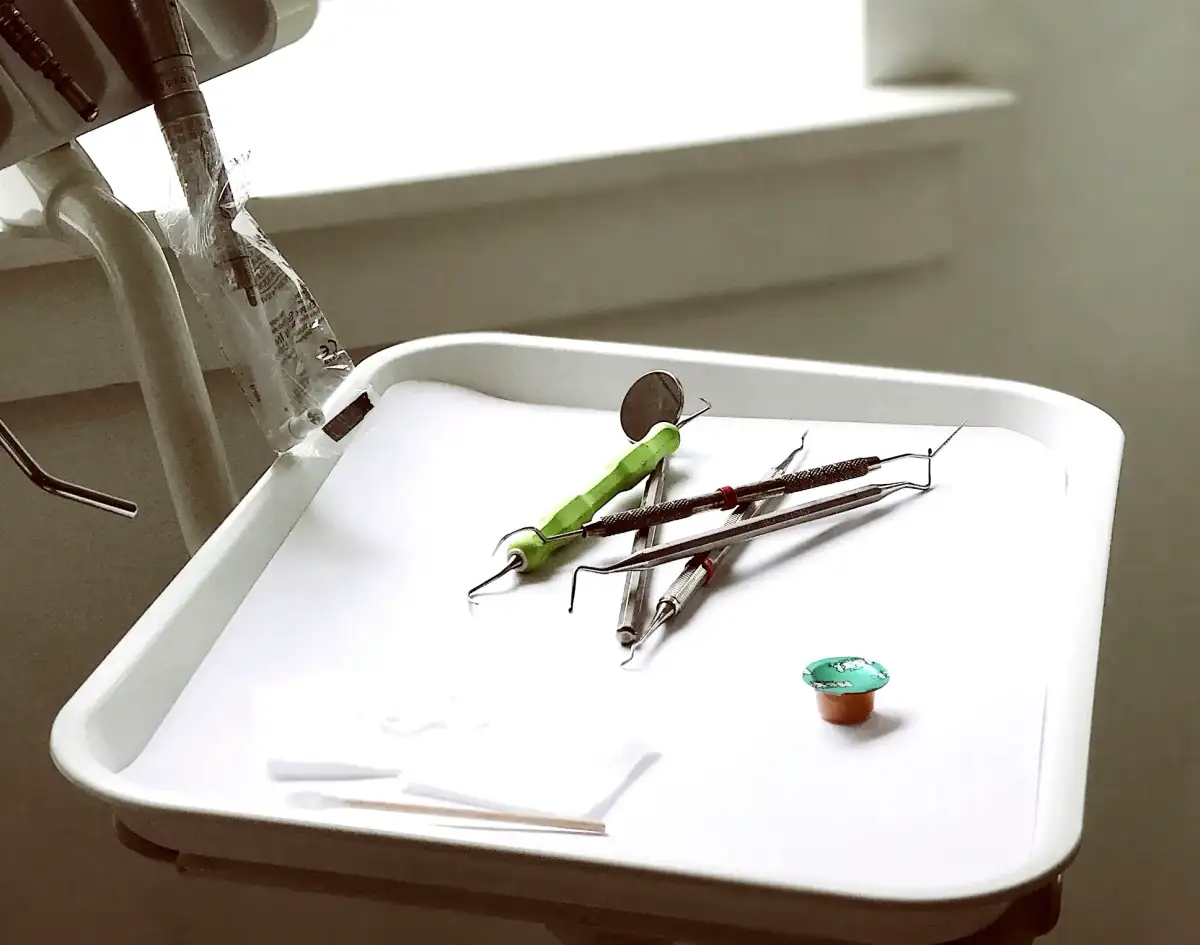
A dental instrument tray on an arm by a bright window (stock photo)
Stock photo.Instruments are sterilized and sealed for every patient.

For referring dentists

Refer a patient in three stops.

Your patient stays your patient. We treat the gums or place the implant, then send them back to you with everything in writing.

  1. R1

    Send it

    Use the form below, fax (785) 555-0187, or call. Tooth numbers (Universal 1–32) and a line about why are enough.

  2. R2

    We call your patient

    Within one business day, to book the evaluation and ask for any x-rays you haven’t sent.

  3. R3

    You get a letter

    Charting, imaging and the plan, within two business days of the visit. Crowns, bridges and recall stay with you.

Open the referral slip

Referral slip

Reason
How soon

Or fax (785) 555-0187, or call (785) 555-0186 and ask for referrals.

Lines in to Salina · approximate drive time

  1. Salinahere
  2. Lindsborg25 min
  3. Minneapolis25 min
  4. Abilene25 min
  5. McPherson35 min
  6. Ellsworth35 min
  7. Junction City45 min
  8. Concordia55 min
  9. Hays90 min

We host a lunch-and-learn for area offices four times a year: case reviews, no product pitches. Ask to be added to the list.

Insurance and financing

You’ll know the cost before the first step.

Fees depend on how many teeth, which stops and what your plan covers, so we don’t post prices. Here’s how paying for it usually works.

  • Dental insurance

    We file with most dental PPO plans. Many cover part of gum therapy. Implant coverage varies widely: some plans pay part of it, many don’t.

  • A written estimate first

    Before any treatment, you get the fee for each step and what your plan is likely to pay, in writing. No surprises at checkout.

  • Spread over two plan years

    Longer plans can be split so you use this year’s maximum and next year’s, when the treatment can safely wait.

  • Financing

    Third-party healthcare financing (subject to approval) or a payment schedule across your treatment visits.

  • HSA and FSA

    Gum therapy and implants usually count as eligible dental care; check your plan’s rules. We give you an itemized receipt.

  • Medical insurance

    Rarely, but sometimes, part of a surgical case after an accident or illness. We’ll tell you if it’s worth asking.

Questions

Asked at almost every first visit.

Q1Do I need a referral to book?

No. Most of our patients are sent by their dentist, but you can book an evaluation yourself. We’ll send your dentist a copy of the chart and plan if you’d like.

Q2What’s the difference between a cleaning and a deep cleaning?

A regular cleaning works above the gumline and just below it. Scaling and root planing cleans the root surfaces down inside the pocket, under local anesthetic, so the gum can tighten around the tooth again.

Q3Can gum disease be cured?

Gingivitis, the earliest stage, can usually be reversed with a professional cleaning and good daily care. Periodontitis is usually managed for life: treated, then kept stable with maintenance visits every few months.

Q4Why save a tooth if an implant lasts?

A natural tooth sits in a thin ligament that cushions each bite and senses pressure. An implant is fused straight to the bone and has no ligament. Implants are a good replacement, but we only take that route when the tooth can’t be kept.

Q5How long does an implant take, start to finish?

It depends on whether a graft is needed. The bone needs time to bond to the implant, which can take up to several months, and some cases can have a temporary tooth the same day. Your plan gives you the timeline before you start.

Q6Does smoking or diabetes change things?

Yes. Smoking is one of the strongest risk factors for gum disease and makes treatment less likely to work. Diabetes also raises the risk. We plan around both; tell us at the first visit.

Q7Will I still see my regular dentist?

Yes. Your dentist keeps your cleanings, fillings and crowns, including the crown on an implant. Many patients alternate maintenance visits between us and their dentist.

Q8What if something hurts after surgery?

Call the office during hours. After hours, the same number reaches our on-call line, and surgery patients get the surgeon’s instructions in writing before they leave.

End of the line · Book

Start at S1.

Book an evaluation and we’ll measure, show you the numbers, and tell you which route each tooth is on. You don’t need a referral.

Call(785) 555-0186
Mon–Thu
7:30 a.m. to 4:30 p.m.
Fri
7:30 a.m. to 1:00 p.m.
Sat, Sun
Closed. Call for the on-call line after surgery.

East Crawford Street, Salina, KS 67401
Parking behind the building; one step at the door.

Request an evaluation

What’s it about?

Please don’t include health details here; we’ll ask on the phone.

CallBook an evaluation