An hour, measured minute by minute.
A comprehensive exam checks how well you see and how healthy your eyes are. Here is where the time goes, what’s different for kids, and what to bring.
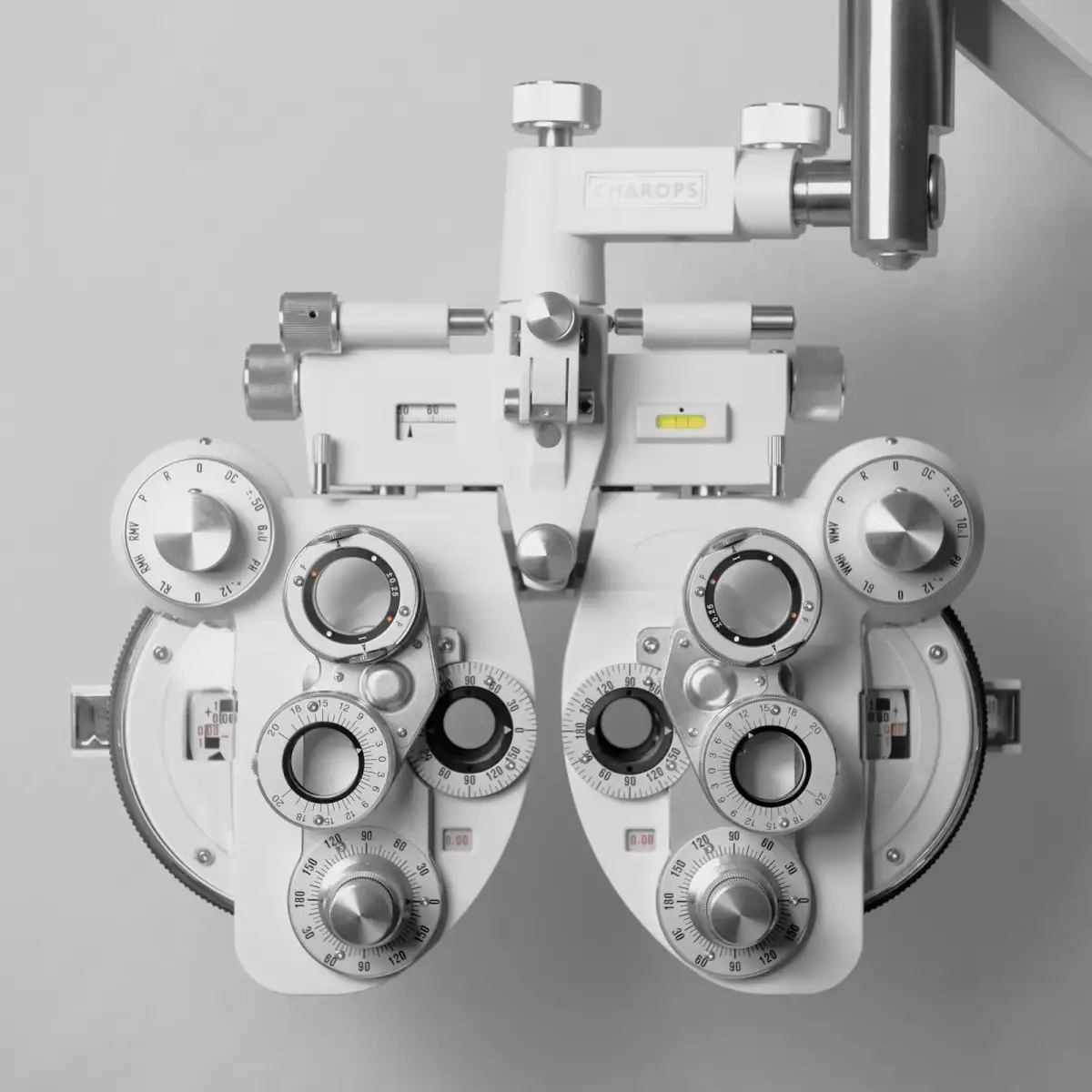
EX.01-ATHE HOUR
Where the 60 minutes go.
MIN 0
STEP 1 OF 6ABOUT 5 MIN
History
Your health, your medications, family history of glaucoma or macular degeneration, and how you use your eyes all day.
MIN 5
STEP 2 OF 6ABOUT 10 MIN
Pretesting
An automated first reading of your prescription, eye pressure, photos of the retina, and a quick check of side vision.
MIN 15
STEP 3 OF 6ABOUT 10 MIN
Refraction
The “better one, or two?” part. It fine-tunes the prescription for glasses.
MIN 25
STEP 4 OF 6ABOUT 5 MIN
Focus and teaming
How your eyes focus, move and work together. It matters most for kids, readers and screen work.
MIN 30
STEP 5 OF 6ABOUT 20 MIN
Eye health
A microscope look at the front of the eye, then the retina and optic nerve, usually with dilating drops.
MIN 50
STEP 6 OF 6ABOUT 10 MIN
Your plan
What we found in plain words, and your prescription in hand before anyone mentions frames.
Times are typical, not promised. A contact lens fitting adds about 15 minutes; dilation adds about 20 while the drops work, and we use that time for the optical if you like.
EX.01-BKIDS’ EXAMS
No letters needed, and no wrong answers.
Kids’ exams use pictures, lights and matching games, so a child doesn’t need to read. A school screening checks distance vision; an exam also checks the three things below, which screenings can miss.
- 01A lazy eye
One eye that sees less clearly than the other, even with glasses. It responds best to treatment when it’s found young.
- 02An eye turn
Eyes that don’t point the same way all the time, sometimes only when a child is tired.
- 03Focusing for reading
Whether the eyes hold focus and team up at reading distance for a whole page, not just one line.
Worth an exam if your child…
- Rubs their eyes or blinks a lot
- Holds books or screens very close
- Covers one eye, or tilts their head to read
- Loses their place or skips lines
- Gets headaches after school or homework
- Avoids reading, or tires of it quickly
Kids’ frames have spring hinges, and every kid’s pair gets impact-resistant lenses. Adjustments are free, and with kids, that’s often.
EX.01-CHOW OFTEN
How often, from six months to sixty-five and up.
6 to 12 months
One exam
No letters needed. We check how the eyes focus and move together.
3 to 5 years
At least once
Matching games and picture charts instead of letters.
6 to 17 years
Before first grade, then yearly
A school screening checks distance vision only. An exam checks the rest.
18 to 64 years
At least every two years
Yearly if you have diabetes, high blood pressure, or a family history of eye disease.
65 and older
Every year
Cataracts, glaucoma and macular changes get more common with age.
For people with no known eye problems, following the American Optometric Association’s recommendations. Diabetes, high blood pressure, a family history of glaucoma, or a strong prescription usually mean yearly visits.
EX.01-DCONTACT LENS FITTINGS
A contact lens has a size line too.
Contacts sit on your eye, so they’re fitted, not just prescribed. A fitting measures the curve and size of your cornea, tries lenses on, and checks how they move when you blink. A follow-up visit makes sure they still feel right after a week of real life.
At the end of the fitting you get a copy of your contact lens prescription, whether you ask or not. Federal law says so, and you can buy your lenses anywhere.
- Daily disposables
A fresh pair every morning, nothing to clean. The simplest choice for new wearers and part-time wearers.
- Two-week and monthly
Cleaned and stored each night. Lower cost per year if you wear them every day.
- Toric
Shaped to correct astigmatism and weighted so they stay oriented on the eye.
- Multifocal
Distance and reading in one lens, for people over 40 who’d rather not wear readers over contacts.
- Rigid gas permeable
Smaller, firmer lenses that hold their shape. Crisp optics for some prescriptions and corneas.
CARE
- Keep water away from your lenses and case: no tap water, no swimming or showering in them.
- Sleep in them only if your lenses are made and prescribed for it.
- Use fresh solution every time, never topped off, and replace the case every few months.
- Red, painful or blurry eye with contacts in? Take them out and call us the same day.
EX.01-ELASIK CONSULTS
We don’t do LASIK. We help you decide, and we’re here after.
BEFORE THE CONSULT
Leave your contacts out first, so your corneas are measured in their natural shape: about two weeks for soft lenses, three for toric soft or rigid gas permeable, and four for hard lenses. Most insurance doesn’t cover LASIK; the consult here is free.
Book a LASIK consult- 01
Are you a likely candidate?
We measure your corneas and check the basics the FDA lists: 18 or older, a prescription that hasn’t changed in the past year, healthy eyes, no dry eye that surgery would make worse.
- 02
Pick a surgeon
We don’t do surgery. We’ll explain the options and send your records to the surgeon you choose.
- 03
Before and after, close to home
When you and your surgeon agree, we see you for the checkups after surgery here in Stillwater. The first is within 24 to 48 hours.
EX.01-FDILATION
The drops are how we see the back of the eye.
Dilating drops open the pupil so we can look at the retina and optic nerve directly. They take about 20 minutes to work. Afterward, light feels bright and close-up vision is blurry for a few hours. Bring sunglasses; many people drive themselves, some prefer a ride.
Bring
- 01The glasses you wear now, even old or broken pairs
- 02Your contact lenses, or a box or blister pack with the prescription
- 03A list of medications and eye drops
- 04Vision plan and medical insurance cards
- 05Sunglasses for after dilation
- 06For kids: their current glasses and any school screening letter